Conditions & Milestones Addressed
- Noise, Light, or Texture Sensitivity (Tactile Defensiveness)
- Constant Jumping, Spinning, or Crashing (Sensory Seeking)
- Poor Body Awareness & Clumsiness
- Picky Eating Related to Oral Texture Sensitivity
- Difficulty Sitting Still & Transitions
Our Clinical Assessment Process
Therapists profile vestibular, proprioceptive, tactile, auditory, and visual processing patterns to understand whether a child is over-responsive, under-responsive, or sensory-seeking.
Therapy Approach & Methodology
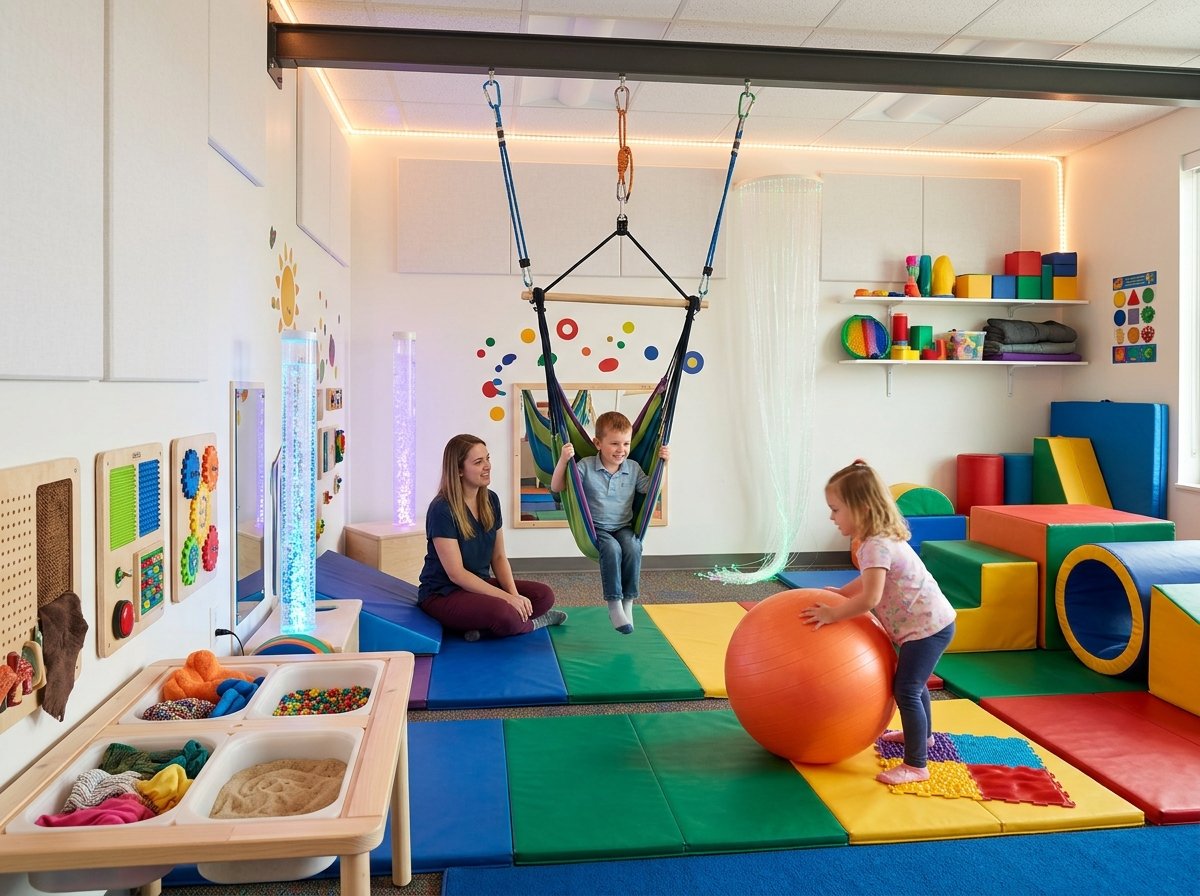
Guided play on suspended swings, balance beams, weighted blankets, and tactile bins provides structured "just-right" sensory challenges that help the nervous system organize responses.
How Families Support Progress
Use a personalized "sensory diet" at home—such as heavy work play (pushing, carrying safe items) or calm-down corners before homework and bedtime.
Visit Our Paharia, Varanasi Centre
All assessments and therapy sessions are delivered in person at Sri Nagar Colony, Paharia, Varanasi—easily accessible from Sarnath, Pandeypur, Sigra, Lanka, Cantt, and nearby districts.
Book Your Child's EvaluationFrequently Asked Questions
What are signs a child may benefit from sensory integration therapy?
Covering ears at everyday sounds, avoiding messy textures or haircuts, constantly seeking rough play or spinning, or frequent meltdowns in crowded places can indicate sensory processing differences.