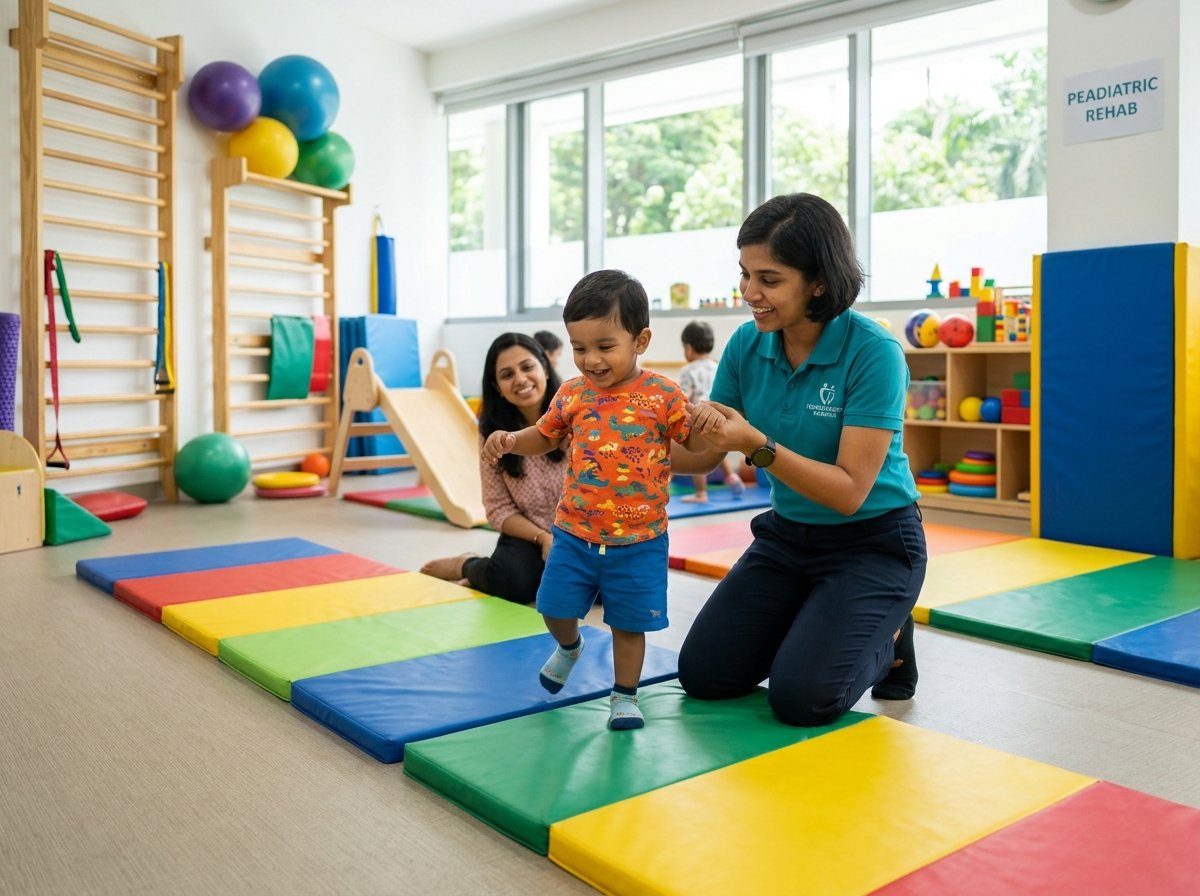
Condition Overview
Cerebral Palsy (CP) refers to a group of non-progressive motor conditions affecting posture, muscle tone, and movement coordination due to early brain injury or developmental differences.
Early Signs & Observations
- Stiffness (spasticity) or floppiness (hypotonia) in limbs
- Persistent fisting of hands beyond 4–6 months
- Asymmetric reaching or crawling
- Delayed head control, sitting, standing, or scissoring gait
Age-Related Considerations
Starting gentle Neuro-Developmental Treatment (NDT) early helps prevent secondary joint contractures and promotes functional mobility.
When to Seek Assessment
Any infant with NICU history, asymmetric limb use, or delayed motor milestones should receive a pediatric neurodevelopmental check.
Assessment & Diagnostic Approach
Dr. Sunil Kushwaha and our physiotherapy team evaluate muscle tone, joint alignment, GMFCS functional level, and oral-motor/feeding needs.
Available Therapy & Intervention Options
NDT Paediatric Physiotherapy, Occupational Therapy for hand function and seating, and Speech/Feeding Therapy.
Role of Parents & Caregivers
Safe daily positioning, gentle range-of-motion routines guided by your physiotherapist, and encouraging active participation in play.
Paediatric Physiotherapy (NDT)
Explore how our Varanasi clinical team supports children with Cerebral Palsy & Motor Delays.
View Therapy Program Book AssessmentFrequently Asked Questions
What therapies help children with Cerebral Palsy achieve greater independence?
A combination of NDT physiotherapy for posture and gait, occupational therapy for hand use and daily living, and speech/feeding therapy when needed.